

 See My Latest Article on HelloNation
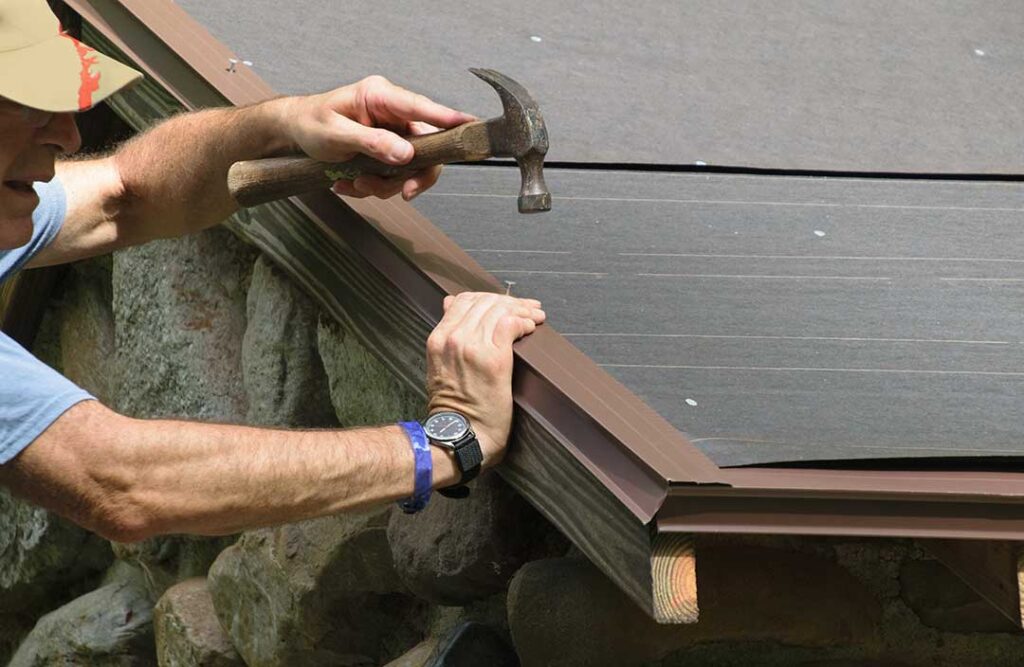
What do gutters do for a roof?
Gutters collect rainwater from the roof and direct it away from the house. That simple function helps protect roof edges, fascia boards, siding, foundations, landscaping, and areas where moisture can damage the building envelope.
Without functioning gutters, water runs off the roof in concentrated streams. It may splash against exterior walls, collect beside the foundation, or flow over walkways and entry areas. During repeated rain, that runoff can contribute to wood decay, soil erosion, basement or crawl-space moisture, and settlement around the home.
Gutters do not make a roof waterproof by themselves. Instead, they support the roof drainage system by controlling where water goes after it leaves the shingles or other roof covering.
How can poor drainage shorten roof life?
Roof damage often begins at the edges, where water, wind, debris, and temperature changes meet. Gutters that are clogged, sagging, poorly pitched, or disconnected can allow water to sit against roof trim and fascia.
Common problems include:
- Rot in fascia boards and soffit materials
- Water staining beneath the roof edge
- Loose or deteriorated gutter fasteners
- Damage to the first rows of shingles
- Leaks near roof edges and transitions
- Moisture entering the attic through damaged trim or flashing
A gutter that overflows does not always mean the roof itself is failing. The cause may be leaves, pine needles, compacted debris, an undersized downspout, or a gutter that has pulled away from the proper slope. Still, repeated overflow should not be ignored because water may be reaching areas that are difficult to inspect.
Why is gutter maintenance especially useful in Ashland?
Ashland experiences seasonal rainfall, summer thunderstorms, falling leaves, and occasional winter freezing conditions. Those changes place varying demands on roof drainage throughout the year.
Heavy rain can quickly overwhelm a gutter system that is partly blocked. Leaves and other organic debris may collect in the fall, while winter freezes can turn trapped water into ice that expands inside seams, downspouts, or small cracks. A mild winter does not eliminate these concerns because repeated freezing and thawing can still loosen joints and fasteners.
Homes surrounded by mature trees generally need more frequent observation than homes with clear rooflines. Even a roof that appears clean from the ground may have hidden debris in valleys, behind chimneys, or along sections that are difficult to see from the yard.
What are the warning signs of gutter-related roof problems?
Several signs suggest that roof drainage needs attention:
- Water pours over the front or back edge during rain
- Gutters sag or pull away from the fascia
- Downspouts discharge directly beside the foundation
- Stains or green growth appear on exterior walls
- Soil is washing away below the roof edge
- Shingles near the eaves look curled, lifted, or unusually dark
- Paint is peeling on fascia or siding
- Water appears in a crawl space, basement, or lower wall
- Gutters remain full of water after rainfall has ended
Some symptoms may have more than one cause. For example, dark areas on shingles can result from moisture, algae, aging, or inadequate ventilation. Likewise, a ceiling stain may come from roof flashing, plumbing, condensation, or gutter overflow. Drainage is one part of the investigation, not automatically the entire diagnosis.
How often should gutters be checked?
Most homes benefit from checking gutters at least twice each year: once in spring and again after most leaves have fallen. Additional checks are sensible after severe thunderstorms, high winds, or periods of unusually heavy rain.
Properties with many nearby trees may require more frequent attention. A useful inspection should include more than removing visible debris. Look for:
- Loose hangers, screws, and end caps
- Separated seams
- Crushed or blocked downspouts
- Gutter sections that slope away from the outlet
- Water marks beneath the roof edge
- Splashing at the base of downspouts
- Plants or soil growing inside the gutter
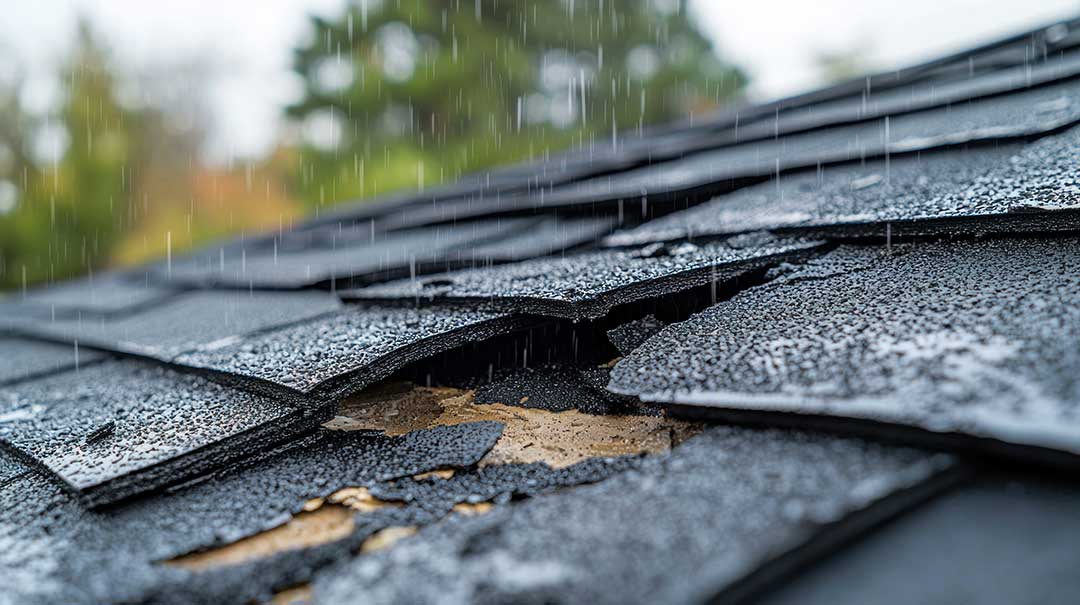
Testing the system with a controlled flow of water can reveal slow drainage, leaks, or overflow that is not obvious during dry weather. Any ladder work should be done on stable, level ground, away from electrical lines, and only when conditions are dry. Roof access adds another level of fall risk and is not necessary for a basic ground-level gutter inspection.
Where should downspouts direct water?
Downspouts should move water far enough away from the foundation that it does not immediately collect beside the house. The correct distance depends on site grading, soil, landscaping, hard surfaces, and whether the home has a basement or crawl space.
A downspout that ends on a narrow strip of soil may create a muddy channel. One that discharges onto a driveway or walkway may cause icing during freezing weather. Water should not be directed toward a neighboring property, a window well, or an area where it can flow back toward the foundation.
Extensions, splash blocks, underground drainage, and grading adjustments can all help, but each has limitations. An extension that becomes buried or crushed can stop working without any visible change at the roofline. Underground components also need to remain clear and should not be assumed to solve a drainage problem simply because they are out of sight.
Do gutter guards eliminate maintenance?
No. Gutter guards can reduce the amount of leaves and larger debris entering a gutter, but they do not make the system maintenance-free. Fine seeds, roof grit, moss fragments, and decomposing organic material can collect on or beneath some guard designs.
Guards may also affect how water enters during intense rainfall. If the surface becomes coated with debris, water can run over the top rather than through the openings. Fasteners, seams, downspouts, and the roof edge still require inspection even when a cover is installed.
The most useful question is not whether a guard eliminates cleaning, but whether it works with the roof pitch, surrounding trees, rainfall patterns, and gutter design on that particular home.
Can gutters prevent all roof leaks?
No. Gutters help control runoff, but they cannot prevent leaks caused by damaged shingles, failed flashing, deteriorated pipe boots, improper penetrations, attic condensation, or storm damage higher on the roof.
They can, however, reduce moisture exposure at roof edges and help reveal drainage problems before they cause more extensive damage. If water is entering the attic or living space, the leak source may be separate from the gutter system even if overflow is occurring nearby.
A roof and gutter inspection should consider both systems together. The goal is to determine whether water is entering through the roof covering, moving behind the gutter, overflowing at the edge, or traveling from another part of the structure.
What should homeowners check after a major storm?
After a strong storm, look from the ground for displaced gutters, missing downspouts, hanging sections, exposed fasteners, fallen branches, and areas where water is draining differently than before. Check interior ceilings and upper walls for new stains, but remember that moisture may appear some distance from the actual entry point.
Do not climb onto a wet roof or attempt repairs near unstable branches or damaged electrical equipment. Hazardous conditions require trained assistance because a seemingly minor gutter or roof problem may involve hidden structural damage.
Consistent gutter care is part of roof care. Keeping water moving through a clear, properly supported path reduces unnecessary stress on the roof edge and helps protect the rest of the home from repeated moisture exposure.