

 See My Latest Article on HelloNation

Roof discoloration is common, but not every dark or green patch means the same thing. Mold, mildew, algae, moss, dirt, and weathered roofing materials can look similar from the ground. In Ashland, VA, humid summers, shaded roof slopes, falling leaves, and periods of wet weather can create conditions where organic growth becomes noticeable.
Identifying the problem correctly helps determine whether simple observation is enough or whether moisture, drainage, or roof damage needs closer attention.
What does mold or mildew look like on a roof?
Mold and mildew usually appear as irregular stains or patches that spread across damp, shaded areas. The color may range from black, gray, brown, or green to yellowish white, depending on the organism and the roofing material.
Common visual signs include:
- Fuzzy, powdery, or slightly raised growth
- Blotchy patches that do not follow the pattern of the shingles
- Green, gray, or black areas near roof edges, valleys, or under overhanging trees
- Growth that becomes more noticeable after rain
- Staining that continues to expand over time
- Organic material collecting around flashing, vents, or gutters
From ground level, some growth may look like a simple stain. Binoculars can provide a closer view without requiring anyone to climb onto the roof.
Mildew is often lighter in color and more surface-level than mold. Mold may appear darker, thicker, or more irregular, although appearance alone cannot confirm the exact type. A laboratory test is generally required for precise identification.
Is every black streak on a shingle mold?
No. Black streaks are often caused by algae rather than mold. A common roof-staining algae can produce long, vertical dark marks that follow the direction of water runoff. These streaks may begin on the lower portions of shingles and gradually move upward.
Algae can be mistaken for mold because both thrive in damp conditions. However, algae usually creates a relatively flat stain, while mold may look patchier, fuzzy, or raised. Moss is easier to distinguish because it forms a soft, green mat or small tufts and may visibly lift the edges of shingles.
Other possible causes of roof discoloration include:
- Accumulated dirt or soot
- Rust runoff from metal components
- Leaf stains
- Sap from nearby trees
- Granule loss exposing the shingle surface
- Old repairs or uneven weathering
- Water stains from drainage problems
A dark mark is more concerning when it is accompanied by soft roofing material, deteriorated sealant, loose shingles, or interior signs of moisture.
Where does roof growth usually develop?
Mold and mildew are most likely to appear where moisture remains for extended periods. Roof sections that receive limited sunlight are especially vulnerable.
Typical problem areas include:
- North-facing or heavily shaded slopes
- Sections beneath tree branches
- Roof valleys where water concentrates
- Areas near clogged or overflowing gutters
- Around plumbing vents and other roof penetrations
- Roof edges where leaves and organic debris collect
- Low-slope sections with slow drainage
In the local climate, summer humidity can slow drying after rain, while autumn leaves may remain in valleys and gutters. Winter freeze-thaw cycles can also worsen small areas of deterioration by expanding moisture that has entered cracks or worn surfaces.
Growth on one shaded roof slope does not necessarily mean the entire roof has a mold problem. Distribution matters. A concentrated patch often points to a local moisture or sunlight issue.
How can a homeowner inspect the roof safely?
The safest first inspection is from the ground. Walk around the property and examine the roofline from several angles. Look for changes in color, texture, sagging, missing shingles, and debris buildup.
A homeowner can also inspect accessible areas such as:
- Gutters and downspouts
- Attic surfaces below suspicious roof sections
- Ceiling areas beneath valleys or roof penetrations
- Exterior walls near roof drainage points
Avoid walking on a roof that is wet, icy, steep, visibly damaged, or covered with moss. Shingles become slippery when damp, and stepping on them can cause additional damage. Moss and mold may also conceal soft decking or weak areas.
An attic inspection can provide useful clues. Dark wood staining, damp insulation, musty odors, rusted fasteners, or daylight visible through the roof assembly may indicate moisture entering from above. However, attic condensation can also cause problems, especially when warm indoor air meets a cold roof surface. Not every attic stain originates from a roof leak.
Does mold on the roof always mean there is a leak?
No. Surface growth can develop without an active leak if the roof remains damp long enough. Shade, poor airflow, organic debris, and slow drainage may be sufficient.
A leak becomes more likely when discoloration is paired with:
- Damp or stained roof decking in the attic
- Water marks on ceilings or upper walls
- Peeling paint near the ceiling
- Wet insulation
- Dripping during or shortly after rainfall
- Soft wood around roof penetrations
- Repeated staining in the same interior location
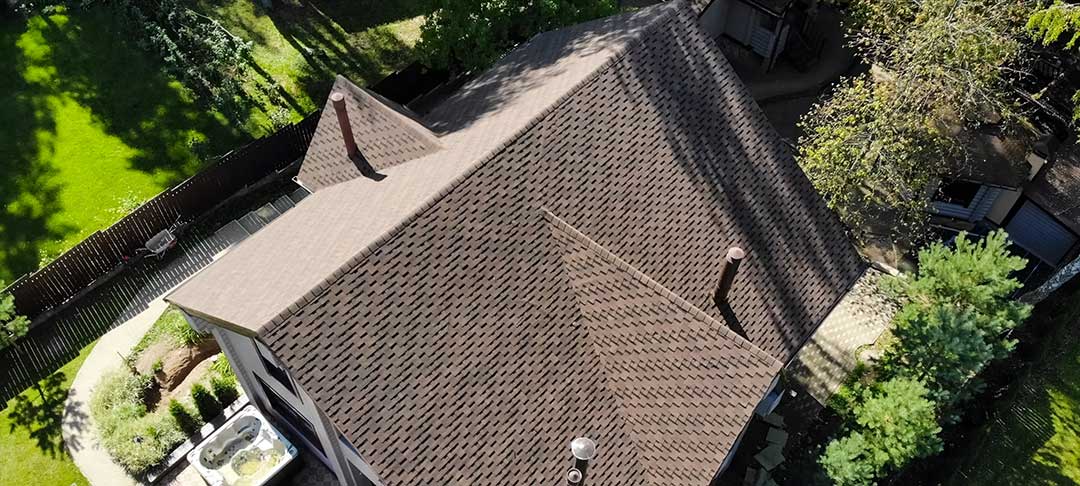
Moisture can travel along rafters, sheathing, insulation, and drywall, so an interior stain may not be directly below the roof defect. Plumbing vents, chimneys, skylights, and flashing are common areas to examine when water appears indoors.
How can mold and mildew be distinguished from moss and algae?
The texture and growth pattern offer useful clues:
- Algae: Usually creates flat black, blue-green, or brown streaks.
- Mildew: Often appears as a thin, powdery, gray, white, or light-colored coating.
- Mold: May be darker, irregular, fuzzy, or patch-like and is often associated with persistent moisture.
- Moss: Forms a three-dimensional green mat or tuft and may lift shingle edges.
- Lichen: Creates crusty, pale green, gray, or orange patches attached firmly to the surface.
These categories can overlap, and mixed growth is possible. A roof may have algae staining alongside moss or mildew. Visual identification is useful for deciding what to inspect next, but it cannot reliably determine whether a specific organism presents a health concern.
What should be avoided when cleaning suspected growth?
Aggressive cleaning can damage shingles and spread contaminated material. Avoid pressure washing, stiff wire brushes, scraping that removes granules, and walking repeatedly across affected areas.
Chlorine-based products and other cleaners may also harm nearby plants, metal components, painted surfaces, or roofing materials if used improperly. Runoff can enter storm drains or affect landscaping.
If cleaning is necessary, the method should match the roof material, the type of growth, and the condition of the shingles. A roof that is already brittle, losing granules, or showing exposed underlayment may be better evaluated before any cleaning is attempted.
When does roof growth require prompt attention?
Prompt evaluation is appropriate when growth is accompanied by structural or moisture-related warning signs. These include sagging, missing or lifted shingles, exposed roof layers, active dripping, widespread moss, soft decking, or rapidly expanding interior stains.
Health concerns also deserve caution. Disturbing moldy debris can release particles, and people with asthma, allergies, or weakened immune systems may be more sensitive. Do not disturb extensive growth inside an attic or around damaged roofing without suitable protective measures.
Small, isolated surface staining may not require urgent action, but it should be monitored. Photographing the area from the ground and recording changes after wet weather can help determine whether the condition is stable or spreading.
How can recurring roof growth be reduced?
Reducing moisture and shade is usually more effective than repeatedly treating the visible stain. Helpful maintenance steps include:
- Keeping gutters and downspouts clear
- Trimming branches that keep roof sections shaded or drop debris
- Removing leaf buildup from valleys when it can be done safely
- Checking that downspouts discharge water away from the foundation
- Watching for damaged flashing or deteriorated sealants
- Maintaining adequate attic ventilation and insulation
- Inspecting roof drainage after heavy rain
Some roofs naturally dry more slowly because of their orientation, surrounding trees, or design. In those cases, recurring discoloration may be a maintenance issue rather than evidence of a hidden leak. The key is to evaluate the roof surface, drainage, and attic together instead of judging the condition by color alone.